If your dentist has recommended a root canal, take a breath — this treatment is a reliable way to stop pain, remove infection, and preserve a tooth that would otherwise be at risk. Modern root canal therapy is performed with care, local anaesthesia, and techniques that make the experience similar to having a routine filling.
At the office of Mountainview Dental, our focus is on thoughtful, evidence-based care delivered with patient comfort in mind. Whether you are concerned about persistent sensitivity or an injury to a tooth, we’ll explain your options clearly and help you choose the approach that supports your long-term oral health.
Keeping a natural tooth whenever possible is generally the best long-term option for function, chewing efficiency, and the health of the adjacent teeth and jawbone. Root canal therapy removes the source of infection while preserving the structure of the tooth so it can continue to perform its role uninterrupted.
When a tooth is properly cleaned, filled, and restored after root canal treatment, success rates are high and most treated teeth remain comfortable and usable for many years. Choosing to restore a treated tooth, typically with a crown or similar protection, helps prevent fracture and preserves the appearance of your smile.
Root canal therapy also avoids some of the challenges that can come after extracting a tooth, such as the need for prosthetic replacements or changes in how your teeth fit together. In short, timely treatment supports both immediate comfort and lifelong oral health.

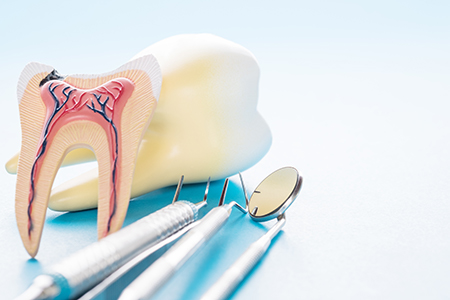
Each tooth contains a central chamber of soft tissue — the dental pulp — made up of nerves, blood vessels, and connective tissue. When decay, trauma, or a deep restoration allows bacteria to reach this tissue, inflammation and infection can develop inside the tooth and at the root tip.
Sensitivity to hot or cold, pain when biting, darkening of a tooth, or swelling around the gumline are all signals that the inner tissues may be compromised. Sometimes no pain is present, and a problem is first discovered on an X-ray during a routine exam; this is why regular dental check-ups are important.
When the pulp is irreversibly damaged, removing the infected tissue and sealing the root system typically eliminates the source of pain and prevents the spread of infection. A root canal allows the tooth to remain in the mouth rather than being removed.
Some common signs that warrant an evaluation for possible root canal therapy include:
Pain that persists after initial home remedies or that wakes you at night often signals that deeper structures are involved. This type of pain should be evaluated promptly to determine whether root canal therapy is needed.
Sharp or lingering pain when consuming hot or cold foods and beverages can mean the nerve is irritated or infected. Such sensitivity that does not resolve typically requires professional assessment.
Discomfort when chewing or when the tooth is tapped can indicate pressure on the nerves or inflammation inside the tooth. This symptom often accompanies infections that reach the root canals.
A tooth that turns darker after an injury or over time may have internal changes in its tissues. Discolouration can be a clue that the pulp has been affected and needs attention.
Damage to a tooth’s structure can expose or injure the pulp, creating a pathway for bacteria. Even a small crack can lead to significant internal problems if left untreated.
Swelling, tenderness, or a draining tract on the gum above a tooth are signs that an infection may have formed at the root tip. Prompt treatment helps reduce the risk of worsening infection.
Infections that extend into the surrounding bone can weaken the support for a tooth, causing mobility. Root canal therapy can allow healing of the surrounding tissues and often stabilizes the tooth when combined with appropriate restoration.

Some teeth with inner infections show clear symptoms; others do not. Radiographs and clinical exams can reveal problems early, before pain becomes severe or the infection spreads. The earlier an infection is controlled, the simpler the treatment and the better the chances of preserving the tooth long-term.
Delaying care increases the likelihood of complications, including more extensive infection, loss of surrounding bone, or the need for extraction. Swift attention often reduces the number of appointments required and can prevent discomfort from escalating.
If you notice signs of trouble or if your general dentist identifies an area of concern on X-ray, an evaluation for root canal therapy should be scheduled without delay. Timely care protects not only the tooth in question but also your overall oral health.
A typical non-surgical root canal begins with a careful assessment, including any necessary radiographs. Local anaesthesia is used so you remain comfortable throughout the procedure. In many cases, a rubber dam is applied to isolate the tooth and keep it dry and sterile while the work is performed.
The dentist creates a small opening in the crown of the tooth to access the pulp chamber and root canals. Using specialised instruments and irrigation, diseased tissue and bacteria are removed, the canals are shaped, and they are disinfected. The space is then filled with a biocompatible material to seal the canals and prevent reinfection.
Some cases are completed in a single visit, while others may require two appointments if an infection needs time to resolve or if a temporary dressing is used between visits. After completion, a permanent restoration — commonly a crown — is placed to restore strength and function to the tooth.
Immediately after the procedure, you may experience transient numbness from the anaesthetic and mild tenderness as the surrounding tissues settle. Over-the-counter pain relief recommended by your dentist usually controls any discomfort. If antibiotics are prescribed for an active infection, take the full course as directed.
A tooth that has undergone root canal therapy is often left with a temporary filling until a permanent restoration is placed. During that interim period, avoid chewing hard or sticky foods on the treated side to reduce the risk of fracture. Maintaining good oral hygiene and regular dental check-ups supports healing and helps the restoration last.
With appropriate restoration and routine care, most root canal–treated teeth remain functional for many years, often for the life of the patient. If you experience persistent swelling, increasing pain, or anything that feels abnormal after treatment, contact our office promptly for reassessment.
In summary, root canal therapy is a predictable, tooth-preserving procedure that relieves pain and addresses infection while keeping your natural dentition intact. At Mountainview Dental, our team takes a clear, compassionate approach to diagnosis and treatment so you understand each step of the process. Contact us for more information or to arrange an evaluation.
A root canal procedure is the best way to save a tooth that has been damaged by decay or injury and preserve your natural smile. The alternative is an extraction and treatment to replace the tooth. While at times a tooth is non-restorable and an extraction is the only option, when possible, it’s best to try and save your natural tooth. With proper care, a tooth with root canal therapy can serve your smile well for many years to come.
Despite lingering myths from before the age of modern dental anesthesia and technology, having a root canal procedure today is as routine and comfortable as visiting the dentist for a filling. While the procedure is performed under local anesthesia with your tooth completely numbed, we can also discuss options in dental sedation.
Whether the symptoms of a dental infection subside after a course of antibiotics, a draining abscess provides you with some temporary pain relief, or a tooth with radiographic evidence of pathology has not yet developed symptoms, it’s essential, before an infection worsens or occurs, to have a root canal procedure performed. In this way, the tooth can be disinfected, filled, and sealed to protect your health and avoid further problems.
If you have sustained a dental injury, have a toothache, jaw pain, swelling, or are experiencing any other unusual and uncomfortable oral symptoms, contact our office immediately for care. Dental problems that have not been evaluated and treated can significantly worsen, producing more severe damage and consequences for the involved teeth, your oral health, and even your overall wellbeing. Once you get in touch with our office, our friendly and compassionate office team will get you in for care at your earliest convenience.
While some root canal procedures can be completed in one visit, others may involve 2 or 3 appointments. How long it takes depends on various factors, including active infection, the number of canals in the tooth, and the tooth’s location or anatomy.
With a success rate that exceeds 95%, root canal therapy remains the most effective procedure to save a tooth in which the inner vital tissues have been damaged. However, as with all healthcare procedures, there are a small percentage of cases where the teeth become symptomatic a second time. The good news is that many of these teeth can still be saved with root canal retreatment or a minor surgical procedure known as an apicoectomy.
The best ways to maintain a tooth with root canal therapy are to get the proper restoration required to rebuild and protect the tooth, maintain proper oral hygiene, and schedule appointments for routine dental checkups and care.
Saving a tooth with root canal therapy is a wise investment that, in the long run, is typically less costly and invasive than having the tooth extracted and replaced with a fixed bridge or implant. As far as the exact cost of care, it can vary depending on which tooth is being treated. Many dental insurance plans provide coverage for root canal therapy. At the office of Mountainview Dental, we do our best to optimize your dental benefits and minimize your out-of-pocket expenses. Our staff will answer all your questions about the cost of care and discuss all your payment options.
At the office of Mountainview Dental, we use the latest technology and most effective methods of care to provide precise and gentle care. Our reputation for excellence is based upon a consistent record of achieving successful treatment outcomes while providing prompt, stress-free, and convenient treatment for every type of dental need.
A root canal is a dental procedure that removes infected or inflamed pulp from inside a tooth's central chamber and root canals. The goal is to eliminate infection while preserving the natural tooth structure. Modern treatment is performed under local anesthesia so the procedure is typically no more uncomfortable than having a large filling placed.
By cleaning, disinfecting, and sealing the root system, a root canal stops the spread of bacteria and relieves toothache caused by pulp damage. After treatment the tooth is restored, often with a crown, to protect it from fracture and restore function. Saving the natural tooth helps maintain chewing efficiency and the alignment of surrounding teeth.
Inside each tooth the dental pulp contains nerves, blood vessels, and connective tissue that can become infected when bacteria penetrate through deep decay, cracks, or traumatic injury. Large or recurrent restorations can also allow microbes to reach the pulp over time. Once bacteria reach this space the tissue can become inflamed and eventually die, creating conditions that commonly require root canal therapy. The infection may extend to the root tip and surrounding bone if left untreated.
Common pathways for infection include untreated cavities, a fractured tooth, or trauma that compromises pulp blood flow. In some cases a tooth may show no pain at first and the problem is discovered on an X-ray during a routine exam. Regular dental check-ups and timely treatment of decay reduce the risk of pulpal infection.
Signs that warrant prompt evaluation include long-lasting or severe toothache, increased sensitivity to hot or cold, and pain when biting or tapping the tooth. You may also notice darkening of a tooth, swelling or a persistent 'pimple' on the gum, or mobility in the affected tooth. These symptoms often indicate that the pulp is compromised and that further assessment is needed. If you experience fever or facial swelling, seek urgent care as these can signal a spreading infection.
Because some infected teeth cause little or no pain early on, radiographs and clinical testing are important for diagnosis. If your dentist identifies changes on X-ray or finds unexpected sensitivity during an exam, they will discuss whether root canal therapy is the appropriate next step. Early evaluation typically keeps treatment simpler and improves the chances of saving the tooth.
Most patients report that modern root canal treatment is no more uncomfortable than receiving a filling because local anesthesia numbs the area before any work begins. Dentists also use techniques such as rubber dams to isolate the tooth and maintain a clean, comfortable working environment. Sedation options such as nitrous oxide are available in many practices to help anxious patients relax during the procedure. Together, these measures significantly reduce procedural discomfort.
After treatment you may feel mild tenderness or pressure for a few days as the surrounding tissues heal, and this is usually controlled with over-the-counter pain relievers recommended by your dentist. Persistent or increasing pain, numbness that does not resolve, or signs of systemic illness should prompt a follow-up appointment. If antibiotics are prescribed for a related infection, take the full course as directed to support healing.
A typical non-surgical root canal begins with a detailed assessment and appropriate radiographs, followed by administration of local anesthesia to ensure comfort. The tooth is isolated, and a small opening is made in the crown to access the pulp chamber and root canals, which are then cleaned, shaped, and irrigated with disinfecting solutions. Specialised instruments remove diseased tissue and bacteria while preserving as much tooth structure as possible. The canals are then filled with a biocompatible material to seal them and reduce the risk of reinfection.
At the office of Mountainview Dental we often place a temporary filling first and schedule a follow-up to attach a permanent restoration, commonly a crown, which protects the treated tooth from fracture. Some cases can be completed in a single visit while others require multiple appointments if an infection needs time to heal between visits. Your dentist will review the recommended restoration and follow-up schedule to support the tooth's long-term function.
Most people can return to normal activities the same day as treatment, though caution is advised while the local anesthesia wears off to prevent biting the cheek or lip. Mild soreness or sensitivity around the treated tooth is common for a few days and usually responds to over-the-counter pain medication and gentle home care. Avoid chewing hard or sticky foods on the treated side until your dentist places the permanent restoration to reduce the risk of fracture.
If your dentist prescribes antibiotics for an active infection, take them exactly as directed and complete the course to support healing. Contact your dentist if you notice increasing pain, persistent swelling, fever, or any unexpected symptoms after treatment. A follow-up visit will confirm healing and allow placement of the definitive restoration.
Although root canal therapy has high success rates, reinfection can occur if bacteria are left behind, if a canal is missed, or if the final restoration fails and allows leakage. Structural failure such as crown fracture or a new cavity can also expose the root system to bacteria, necessitating retreatment or other interventions. In some cases an endodontic specialist may perform retreatment or a surgical procedure called an apicoectomy to address persistent infection. Timely diagnosis of problems increases the likelihood of preserving the tooth.
Long-term success depends on thorough cleaning, a well-fitted restoration, and good oral hygiene habits. Regular dental check-ups with radiographs help monitor the treated tooth and detect issues early. Discuss signs to watch for with your dentist so you can respond quickly if problems recur.
The main alternative to root canal therapy is extraction of the affected tooth, which eliminates the source of infection but necessitates a decision about replacing the missing tooth to restore function and prevent shifting of adjacent teeth. In select situations, monitoring the tooth or performing less invasive vital-pulp therapy may be options for very recent injuries or specific patient populations. Short-term use of antibiotics can manage symptoms temporarily but does not remove infected tissue inside the tooth. Your dentist will explain which choices are appropriate based on tooth condition, general health, and long-term goals.
If extraction is chosen, restorative options include dental implants, bridges, or partial dentures to replace the missing tooth and maintain oral function. Each option has clinical trade-offs related to invasiveness, longevity, and the health of surrounding teeth and bone. A careful discussion with your dentist ensures the selected plan aligns with your needs and prognostic factors.
After root canal therapy maintain excellent oral hygiene by brushing twice daily and flossing to reduce bacterial load and protect surrounding teeth and gums. Avoid chewing on hard, sticky, or extremely crunchy foods on the treated side until a permanent restoration is in place to prevent fracture. Using a fluoride toothpaste and attending routine cleanings supports overall oral health and the longevity of the treated tooth.
Schedule the recommended follow-up appointments so your dentist can confirm healing and place the final restoration in a timely manner. If you experience new or worsening pain, swelling, or any unusual symptoms, contact your dental office promptly for reassessment. Regular dental exams and periodic radiographs help ensure the treated tooth remains healthy for many years.
Contact the office in Georgetown, Ontario promptly if you experience severe toothache, swelling, fever, a draining sinus near the gumline, or sudden changes in how your teeth fit together, as these can indicate a spreading infection or an urgent problem. Mountainview Dental offers emergency appointments and extended hours to address urgent dental needs and evaluate whether root canal therapy or another intervention is required. Early assessment typically reduces complications and helps preserve the tooth.
If you have recently completed treatment and notice persistent or worsening symptoms, contact the office right away for a follow-up exam rather than waiting for the next scheduled visit. Bring any recent dental records or X-rays if available, and be prepared to describe your symptoms and the timeline of care so the team can prioritise evaluation. Prompt communication ensures timely management and better outcomes.