Call or Text us at:
(905) 877-7171


Advances in dental materials, digital workflows, and clinical techniques have changed what’s possible when replacing missing teeth. While implants and fixed bridgework offer long-term fixed options for many patients, removable dentures remain a reliable and adaptable solution for restoring form and function. Well-made dentures can provide immediate improvement in appearance, speech, and chewing ability while supporting facial contours and overall oral health.
At the office of Mountainview Dental, our approach to denture care blends careful clinical evaluation with thoughtful design and lab craftsmanship. We focus on creating prostheses that fit comfortably, look natural, and integrate with a patient’s daily life. Every appliance is individualized to match your bite, lip support, and personal goals so that the final result feels and functions like a natural part of your mouth.
We believe in clear communication and step-by-step planning. Whether you are considering a first denture, replacing an older prosthesis, or exploring implant-retained options for added stability, our team in Georgetown, Ontario will walk you through the choices and the sequence of care so you can make an informed decision that suits your needs and expectations.
Losing one or more teeth affects more than just the way your smile looks. Gaps in the dentition can alter the way you bite and chew, limit the foods you can enjoy, and make clear speech more difficult. Over time, the remaining teeth can shift toward those empty spaces, creating bite problems and increasing the risk of decay and gum disease for the neighboring teeth.
There are also subtle changes to facial support when teeth are absent. Without the vertical height provided by teeth, the cheeks and lips can lose volume and the lower face may take on a more collapsed appearance. Dentures can help restore this support, helping you maintain a more natural profile and a healthier facial appearance.
Beyond the physical effects, tooth loss can influence self-image and social comfort. Restoring a complete set of teeth—whether through partial or complete dentures—often produces an immediate, positive change in the way people feel about their smile and how they interact with others. Addressing missing teeth in a timely, well-planned manner helps limit long-term dental problems and preserves oral function.
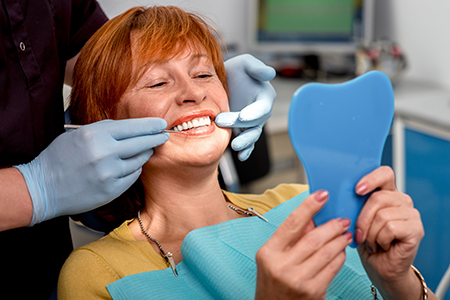
Dentures are removable prosthetic devices that replace missing teeth and the surrounding gum tissue. They are made up of artificial teeth set into a base that mimics natural gum color and contours. The base is tailored to sit comfortably against the gums and, in many cases, uses the natural suction of the mouth to remain secure in place.
There are important differences between removable dentures and fixed solutions like bridges or implant-supported crowns. Removable prostheses are intended to be taken out for cleaning and for periods of rest, which makes them a flexible option for many patients. They also offer the ability to replace multiple teeth without altering adjacent natural teeth.
Today’s denture materials and fabrication methods—from high-quality acrylics to digitally milled teeth and customized color matching—allow us to produce appliances that are both strong and lifelike. The goal is to achieve a comfortable fit, stable function, and a gentle transition for patients who are adapting to life with a prosthesis.
Selecting the right type of denture begins with a comprehensive dental assessment that evaluates remaining teeth, gum health, bone levels, and personal preferences. When all teeth in an arch are missing or must be removed, a complete (full) denture is the conventional choice. When several teeth remain, a partial denture can fill the gaps and help preserve the position of the remaining natural teeth.
Full dentures replace an entire upper or lower arch. They can be made as immediate dentures—placed at the time of extraction so a patient is not without teeth during healing—or as conventional dentures once healing is complete. Immediate options offer convenience, though they often require follow-up adjustments as the tissues settle.
Conventional complete dentures are fabricated after the extraction sites have healed and the gums have stabilized. This timing typically results in a more predictable fit. Immediate dentures, by contrast, are made in advance and inserted right after extractions, providing immediate replacement but sometimes necessitating relines and adjustments later as tissues remodel.
Immediate Denture
Immediate dentures allow patients to leave the office with teeth in place on the same day as extractions. They are a practical choice for those who prefer continuous tooth replacement, with the understanding that refitting may be needed during the healing phase.
Overdenture
An overdenture gains added retention by fitting over existing tooth roots or specially placed abutments. This approach preserves some of the natural tooth structure and can help maintain bone levels in selected cases.
Implant-Supported Dentures
When implants are used as anchors, a denture snaps or clips into place on top of these posts. Implant-supported designs significantly increase stability and chewing efficiency and are frequently recommended for lower-arch restorations where traditional suction is less predictable.
Removable partial dentures are designed to replace one or several missing teeth while attaching to the existing dentition for support and retention. They can be fabricated with discreet metal clasps, precision attachments, or flexible materials depending on the clinical needs and esthetic priorities.
A well-designed partial denture not only restores the appearance of a full smile but also helps prevent the remaining teeth from drifting into empty spaces. This stabilization preserves the bite and reduces the likelihood of future restorative problems caused by shifting teeth.
Materials and frameworks have improved markedly. Options range from traditional cast metal frameworks to lightweight flexible resins and hybrid constructions, allowing for durable, comfortable partial prostheses suited to a wide variety of cases.
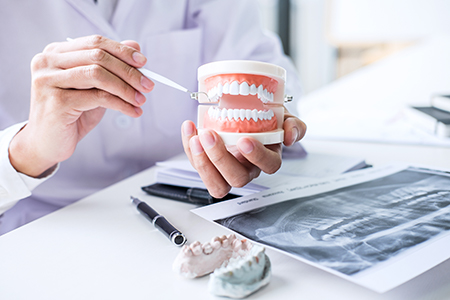
Creating a successful denture is both a technical and artistic process. It begins with a detailed clinical exam, impressions or digital scans, and careful analysis of how your jaws come together. We consider tooth size, shape, shade, and the way lips and cheeks rest against the teeth so the finished prosthesis looks natural and supports clear speech and efficient chewing.
In some cases, preparatory treatments are necessary to ensure a healthy foundation for a prosthesis—this can include extractions, periodontal care, or minor soft-tissue modifications. When implants are part of the plan, coordinated surgical and restorative steps are scheduled to achieve predictable results.
The laboratory phase involves selecting teeth, arranging them in wax for try-in, and refining contours and bite relations before the final acrylic or hybrid denture is processed. Try-in appointments let patients and clinicians evaluate esthetics and function together so necessary adjustments can be made before the final delivery.

Adapting to a new denture is a gradual process. Early days may include minor soreness, increased saliva, or a temporary change in speech. These effects typically diminish as you and your oral tissues adapt. We recommend short, frequent wearing periods at first and scheduling follow-up visits so any pressure points can be smoothed and the fit refined.
Eating with a new denture is best approached slowly—begin with soft, easy-to-chew foods and cut food into small pieces. Avoid biting directly into hard items with front teeth until you feel confident in the fit. With practice, most patients regain strong chewing ability and return to a varied, nutritious diet.
Cleaning and nightly care
Rinse dentures after meals and brush them daily with a denture brush and nonabrasive cleaner. Remove prostheses at night to allow the gums to rest; when not worn, keep them in water or a manufacturer-recommended soaking solution to prevent warping.
Regular dental reviews
Even with removable prosthetics, periodic examinations are essential. During checkups, we evaluate fit, tissue health, and the stability of any remaining teeth or implants, and recommend relines or repairs when appropriate to maintain comfort and function.
When additional retention is helpful
For patients experiencing looseness, enhancements such as implant attachments or precision clips can greatly improve security and confidence. We can review these options and plan a course of care that best matches your goals.
At the office of Mountainview Dental, our goal is to provide denture solutions that restore comfort, conserve oral health, and help you feel confident in everyday life. If you’d like to learn more about denture options or arrange a consultation, please contact us for additional information.
Today, it’s easier than ever to replace missing teeth and achieve natural-looking, durable, and long-lasting results! Depending on a patient’s dental needs, lifestyle, expectations of care, and budget, choices can include conventional fixed bridgework, dental implants, or removable partial and complete dentures. At the office of Mountainview Dental, we’ll discuss all your options in care and answer all your questions as you choose the solution that’s right for you.
With advances in dental materials and technology, today’s dentures are more comfortable and realistic-looking than ever before.
Whether you wear partial or complete dentures, it’s essential to see the dentist for routine care. Besides checking the fit and condition of your dentures and making any necessary adjustments, you’ll also receive a comprehensive exam to check on the health of any remaining teeth as well as the soft and hard tissues in and around the oral cavity.
A same-day denture offers an accelerated design and fabrication process that allows a patient to go from impression taking to denture insertion in a single day.
For patients who don’t want to wait after having teeth extracted, an immediate denture can be inserted the same day your teeth are removed. Sometime later you may need the denture relined to address any changes in its fit once the extraction sites have completely healed.
While no one wants to drop or break a partial or complete denture, accidents do happen. The good news is that in some cases, your partial or complete denture is reparable. It all depends on the extent of the damage. Don’t hesitate to contact our office if you’ve broken or damaged your denture. We’re happy to help.
The simple act of taking your partial denture in and out can cause certain types of metal clasps to loosen over time. When you come in for your checkup visit or contact our office for an adjustment, we’ll assess the fit of your partial and tighten the clasps for improved stability and comfort.
While rebuilding a complete smile is a worthwhile investment, our office is sensitive to the costs involved in dental care. We customize care and will discuss which treatment options address your needs, lifestyle, and budget. How much a new denture will cost depends on the type of the prosthesis, its design, and the materials used to fabricate the supportive base, teeth, and clasps or precision attachments. Dentures that include the placement of dental implants for added retention and stability typically involve additional costs.
If you have dental insurance, your coverage may include a new or replacement set of dentures. Our staff is happy to review your coverage with you to ensure you are maximizing your insurance benefits while minimizing any out of pocket expenses.
At the office of Mountainview Dental, we provide an extensive range of dental services, including the latest and most effective methods to help patients with missing teeth rebuild complete and beautiful smiles. As skilled and experienced professionals, we recognize that every patient is different, and every smile is unique. We’re passionate about what we do and take great pride in providing personalized treatment plans while treating our patients as valued partners in care.
Dentures are removable prosthetic devices designed to replace missing teeth and the surrounding gum tissue to restore appearance and oral function. They consist of artificial teeth set into a base that mimics the color and contour of natural gums and are shaped to fit the patient’s mouth. Depending on the design, dentures rely on close tissue contact, suction, or attachments to remain stable during speaking and chewing.
Well-crafted dentures help support facial contours, improve speech, and expand the range of foods a patient can comfortably eat. Advances in materials and fabrication techniques allow clinicians to match tooth shape, size, and shade for a natural appearance. The overall goal is a comfortable, functional prosthesis that integrates with the patient’s bite and daily routine.
There are several common categories of dentures, including complete (full) dentures that replace all teeth in an arch and removable partial dentures that fill one or more gaps while preserving remaining teeth. Complete dentures can be made as conventional appliances after healing or as immediate dentures placed at the time of extraction. Partial dentures attach to existing teeth with clasps, precision attachments, or flexible frameworks to restore function without altering adjacent crowns.
Other modern options include overdentures that fit over retained roots or root-supported attachments and implant-supported dentures that clip or snap onto dental implants for increased stability. Implant-retained designs are particularly helpful in the lower jaw where suction is less reliable. Material choices—from high-quality acrylics to milled or hybrid materials—allow customization for strength, comfort, and esthetics.
Choosing between dentures, bridges, and implants depends on the number and condition of remaining teeth, bone volume, general health, and the patient’s functional and esthetic goals. Bridges replace one or more adjacent missing teeth by using nearby teeth as supports, while dentures replace multiple or complete arches without altering as many natural teeth. Dental implants can support single crowns, bridges, or dentures and are valued for their long-term stability and ability to preserve underlying bone.
A thorough clinical evaluation, including examination of gum health and bone levels, helps determine the most appropriate option. Each approach has different treatment timelines, maintenance requirements, and surgical considerations that should be discussed with your dentist. The best choice balances predictable function, esthetics, and what fits your lifestyle and oral health needs.
The denture process begins with a comprehensive exam, diagnostic records and discussions about goals and expectations. Clinicians take impressions or digital scans, evaluate jaw relationships, and often perform try-in stages with wax setups so tooth position, shade and bite can be assessed before the final prosthesis is processed. Preparatory treatments such as extractions, periodontal care or minor soft-tissue adjustments may be necessary to create a healthy foundation for the appliance.
Laboratory steps include selecting teeth, arranging them for a try-in, and refining contours and occlusion prior to final processing. Once the finished denture is delivered, follow-up visits are scheduled to fine-tune the fit and relieve pressure points. Ongoing reviews allow the dentist to monitor tissue changes and recommend relines or adjustments when needed.
Immediate dentures are fabricated in advance and placed at the time of tooth extractions so the patient is not without teeth during healing. Because they are made before tissues have fully settled, immediate dentures often require one or more relines or adjustments as gums remodel and swelling resolves. They provide an immediate esthetic and functional solution but typically need close monitoring during the healing period.
Conventional dentures are made after extraction sites have healed and soft tissues have stabilized, which usually results in a more predictable long-term fit. The conventional approach can reduce the need for extensive early adjustments but requires a healing interval when the patient may be without teeth or use a temporary appliance. Your dentist will discuss the trade-offs and recommend the timing that best suits your clinical situation and preferences.
Implant-supported dentures gain retention and stability by connecting the prosthesis to anchored implants placed in the jawbone. This connection reduces movement during chewing and speaking, greatly improving comfort and confidence compared with many conventional removable dentures. For lower-arch restorations in particular, implants often provide the most reliable solution for stability where suction alone is less predictable.
Designs range from overdentures that snap onto several implants to fixed hybrid prostheses that are screw-retained for a near-permanent solution. Implant-supported options also help preserve bone by transmitting functional load to the jaw, which can slow the resorption that commonly accompanies tooth loss. Treatment planning involves coordinated surgical and restorative phases to achieve predictable outcomes.
Daily care begins with rinsing dentures after meals to remove food debris and then gently brushing them with a denture brush and nonabrasive denture cleanser. Avoid using regular toothpaste on acrylic dentures because it can be abrasive and create microscopic wear over time. Handle appliances carefully to prevent dropping them, and clear the sink or place a towel underneath while cleaning.
Overnight wear should generally be avoided; remove dentures before sleep to allow gum tissues to rest and to reduce pressure on the jaw. When not worn, store dentures in water or a manufacturer-recommended soaking solution to prevent warping. Regular dental checkups are important so the dentist can assess fit, tissue health, and the condition of any attachments or implants.
The lifespan of a denture depends on material quality, wear patterns, changes in the mouth and how carefully it is maintained; many dentures last several years before significant adjustments or replacement are needed. Natural changes in the jaw and soft tissues over time can affect fit, leading to looseness, sore spots or changes in chewing efficiency. Routine follow-up appointments allow the dentist to recommend relines, repairs or adjustments to restore comfort and function.
Relines recontour the tissue side of the denture to match new gum anatomy, while repairs address fractures or damaged teeth. When wear on denture teeth or structural problems compromise function or esthetics, a replacement prosthesis may be advised. Regular professional evaluations help detect these issues early and maintain long-term oral health.
Adjusting to new dentures commonly involves a brief period of increased saliva, minor soreness and temporary changes in speech. These effects usually diminish as the muscles and tissues adapt, but some patients require multiple follow-up visits for pressure relief and bite refinement. Starting with short wearing periods and gradually increasing time in the first few days helps the mouth acclimate more comfortably.
Eating with new dentures is best approached slowly: begin with soft foods, cut items into small pieces and chew on both sides to stabilize the appliance. Practicing speaking aloud, reading passages or reciting common phrases can speed recovery of clear speech. If persistent discomfort or difficulty eating and speaking continues, contact your dentist so adjustments can be made.
Good candidates for dentures include patients who are missing multiple teeth, have extensive dental disease that limits restorative options, or prefer a removable solution to restore function and esthetics. The decision is based on a comprehensive clinical evaluation of remaining teeth, gum and bone health, medical history and personal goals. The dentist will discuss alternatives, such as implant-supported options or conservative partial restorations, to determine which approach best matches the patient’s needs.
At the office of Mountainview Dental in Georgetown, Ontario, the evaluation typically includes an oral examination, diagnostic records and a clear discussion of treatment sequencing and expected outcomes. These consultations allow the team to develop a personalized plan, coordinate any preparatory care and schedule try-ins and follow-up visits to ensure a comfortable, predictable result. Patients are encouraged to raise questions during these visits so the chosen solution fits their lifestyle and oral-health priorities.